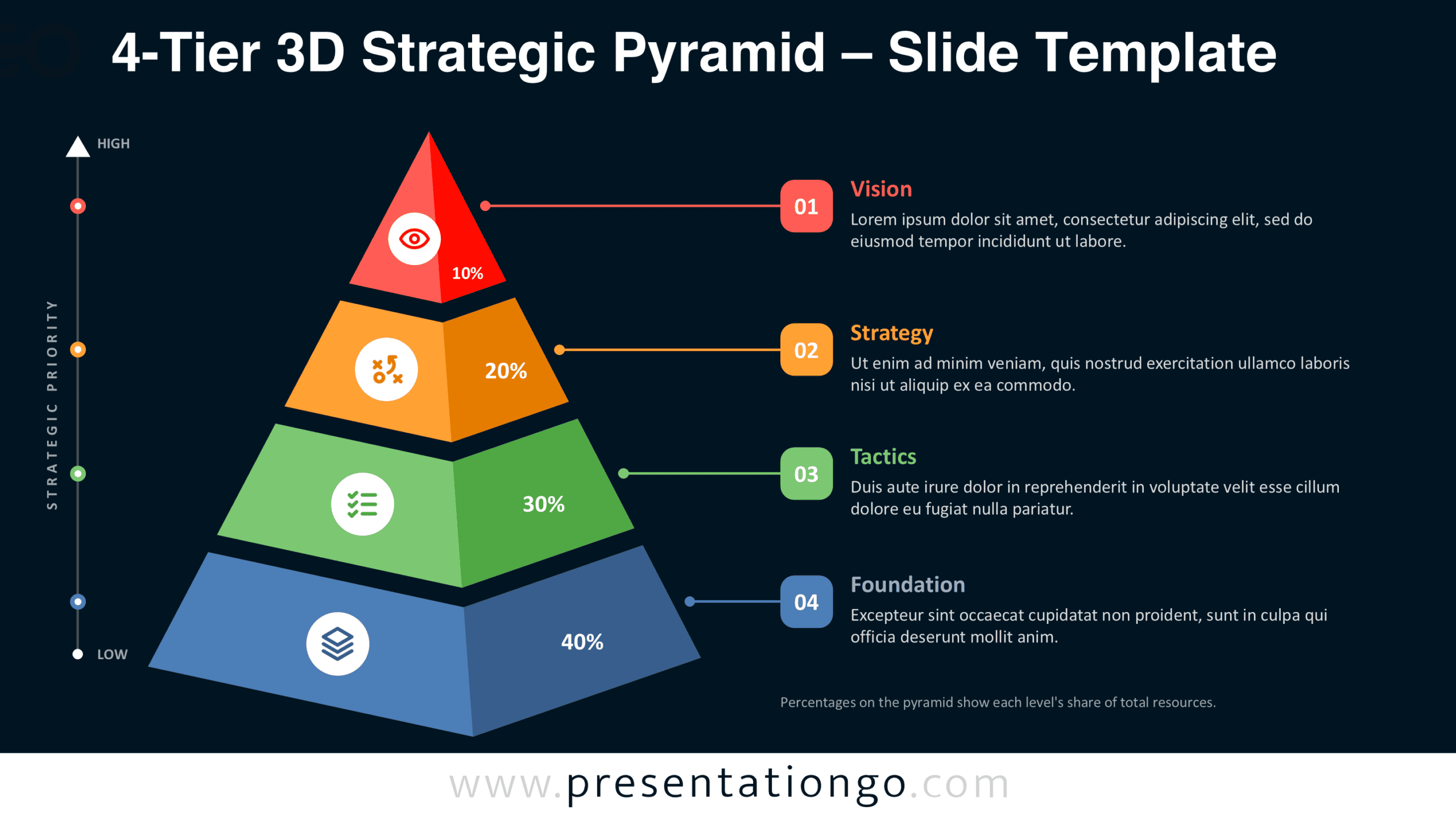
The 4-Tier 3D Strategic Pyramid is a layered infographic for PowerPoint and Google Slides that presents organizational priorities through four connected planning levels. It combines Vision, Strategy, Tactics, and Foundation into a structured hierarchy, with percentage-based resource allocation and supporting explanations. The diagram helps distinguish high-level direction from the operational support required to carry it out.
Diagram Preview
The preview displays the complete pyramid in Light and Dark presentations, including its four numbered callouts, resource percentages, and vertical strategic priority scale.



Features and Customization Options
- Slides: 2 slides with Light and Dark backgrounds
- Customization: Editable shapes, colors, and text
- Graphics: Scalable vector elements and replaceable illustrative icons
- Format: 16:9 widescreen
- Compatibility: Microsoft PowerPoint (.PPTX) and Google Slides
Design and Structure
Four separated, perspective-style tiers form a 3D pyramid that widens toward its base. Each tier includes a percentage and an illustrative icon placeholder, with horizontal connectors leading to numbered descriptions on the right. A vertical priority scale reinforces the top-down hierarchy, creating a modern strategic framework that distinguishes vision, strategy, tactics, and foundation.
Practical Applications
- Strategic Planning: Map organizational vision, strategic direction, tactical initiatives, and foundational capabilities into four levels.
- Resource Allocation: Compare proportional resource assignments across planning layers using the accompanying percentage labels.
- Leadership Alignment: Explain how strategic priorities relate to the supporting activities beneath each level.
- Organizational Frameworks: Arrange related responsibilities into a hierarchy that distinguishes direction from execution.
- Planning Reviews: Discuss each tier individually using the numbered descriptions and corresponding pyramid segments.
Summary
This four-level pyramid provides a practical framework for discussing strategic relationships and resource distribution together. Its combination of hierarchy, quantitative labels, and explanatory callouts supports focused conversations about planning priorities.