Three-Option Rounded Cards is a three-column comparison diagram for PowerPoint and Google Slides. It organizes three independent options into matching information panels with distinctive curved headers. Each panel provides space for a clear heading and a supporting description, making the layout suitable for presenting alternatives, categories, or related ideas.
Diagram Preview
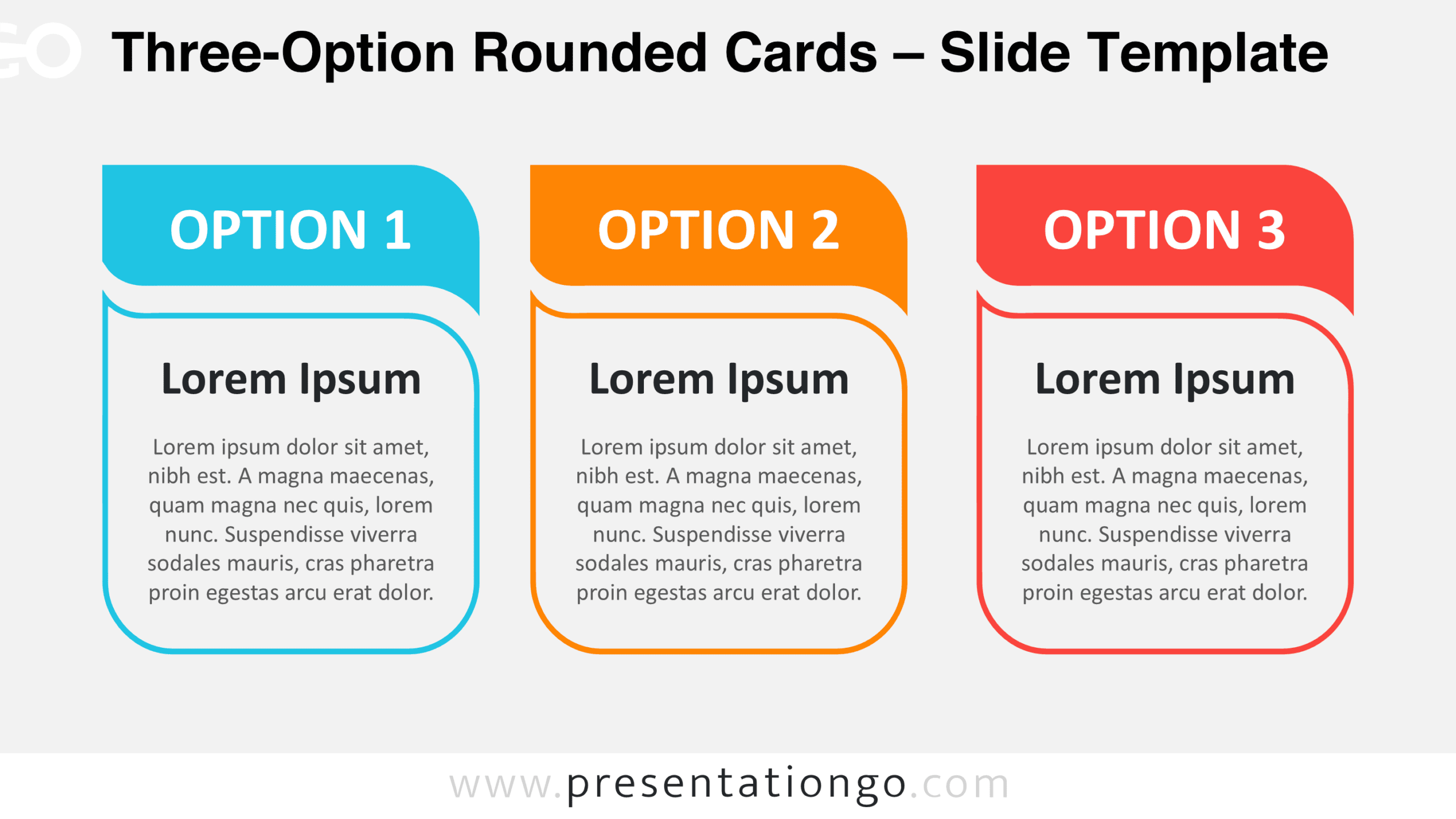
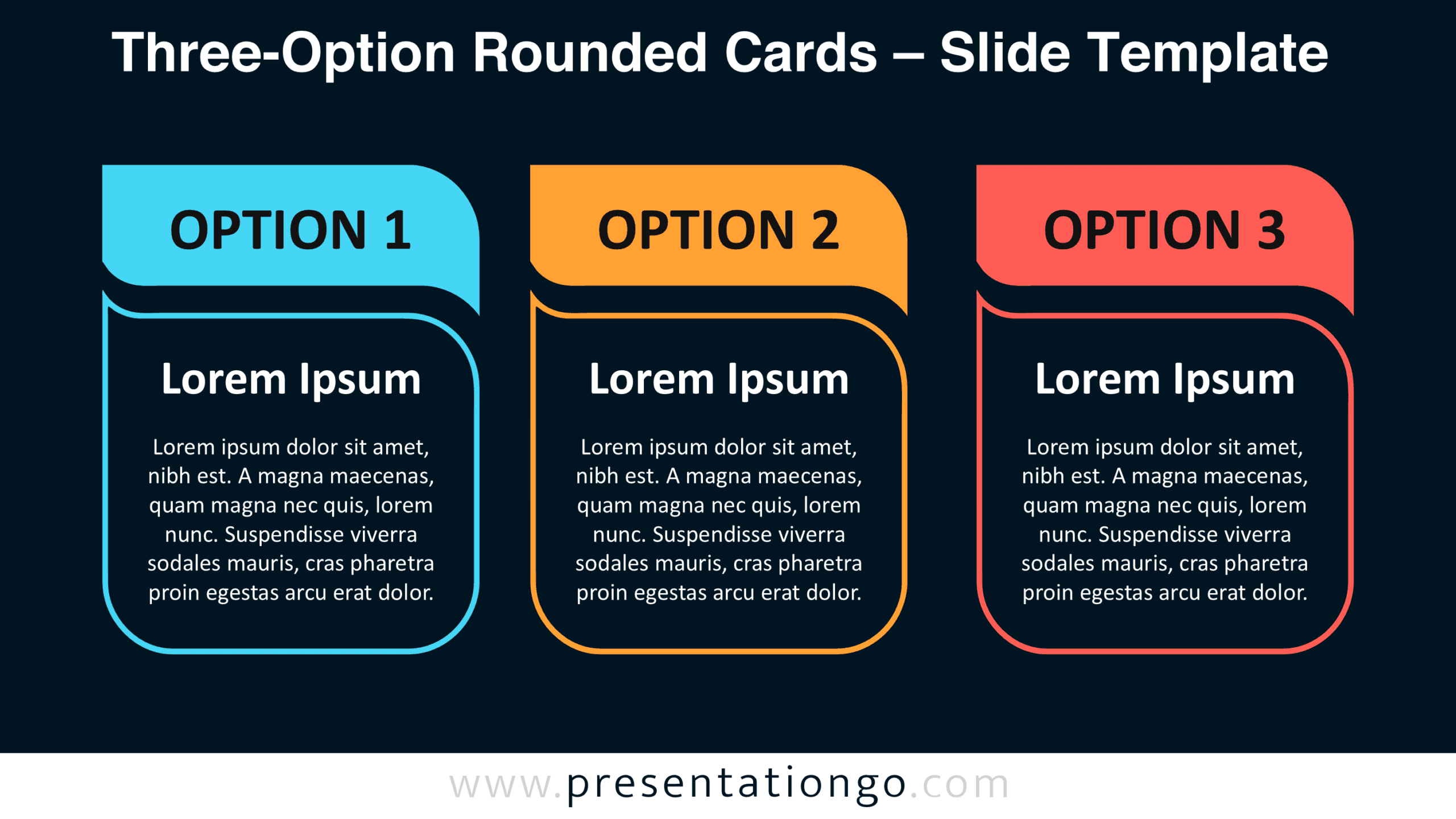
The preview shows three equally sized rounded cards arranged horizontally. Each card features a prominent numbered header, a secondary heading, and a descriptive text area. Both screenshots display the same composition with different background treatments, allowing users to see how the layout appears in contrasting presentation settings.


Features and Customization Options
- Designed for Microsoft PowerPoint and Google Slides.
- Three-option layout with equally sized information cards.
- Three separate header areas for option labels.
- Rounded content panels with dedicated heading and description areas.
- Consistent horizontal alignment and spacing between cards.
- Includes two background variations.
Design and Structure
The diagram consists of three vertical cards positioned in a single horizontal row. Each card combines a broad upper header with a separate rounded rectangular frame below. The header has a distinctive curved extension at its lower-right edge. This shape creates a visual connection with the content panel without merging the two areas. Thin outlines define the lower frames, while generous spacing separates the cards. All three columns share consistent proportions, creating a balanced composition without emphasizing one option over another.
Each header displays a large, centered option number. Inside the lower frame, a bold secondary heading sits above a multiline description. The centered text establishes a clear hierarchy between the option label, its title, and its supporting details. Viewers can read each card from top to bottom or compare equivalent information horizontally. Because no arrows or connectors link the panels, the arrangement communicates parallel choices rather than a required sequence.
Practical Applications
- Compare three product packages by listing their main characteristics and differences in separate cards.
- Present three strategic alternatives with a concise explanation of each proposed approach.
- Outline three service tiers using distinct headings and comparable descriptions.
- Summarize three competing solutions during a decision-making discussion.
- Organize three project recommendations with their objectives and supporting information.
- Explain three related concepts within a training session using consistent text sections.
Summary
Three-Option Rounded Cards provides a balanced structure for communicating parallel information. Its curved headers establish clear divisions, while the matching text panels maintain a consistent reading pattern. The design helps audiences review three subjects individually and compare their details within a single slide.