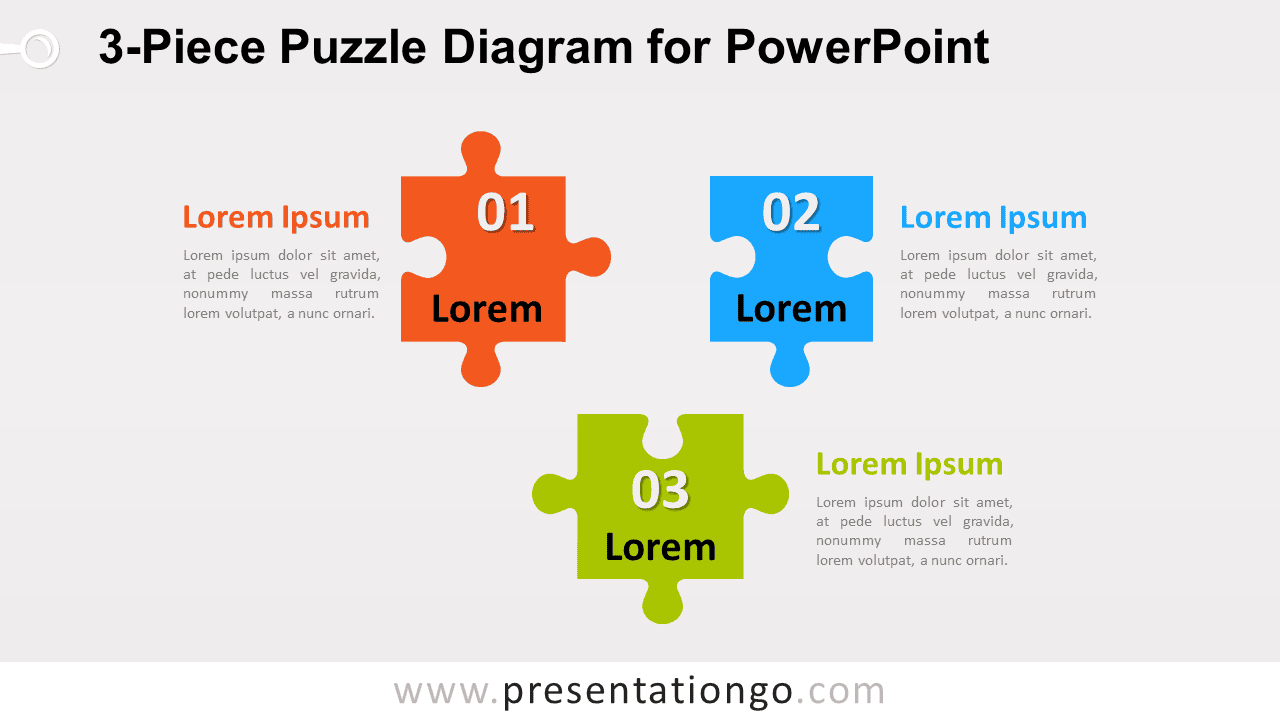
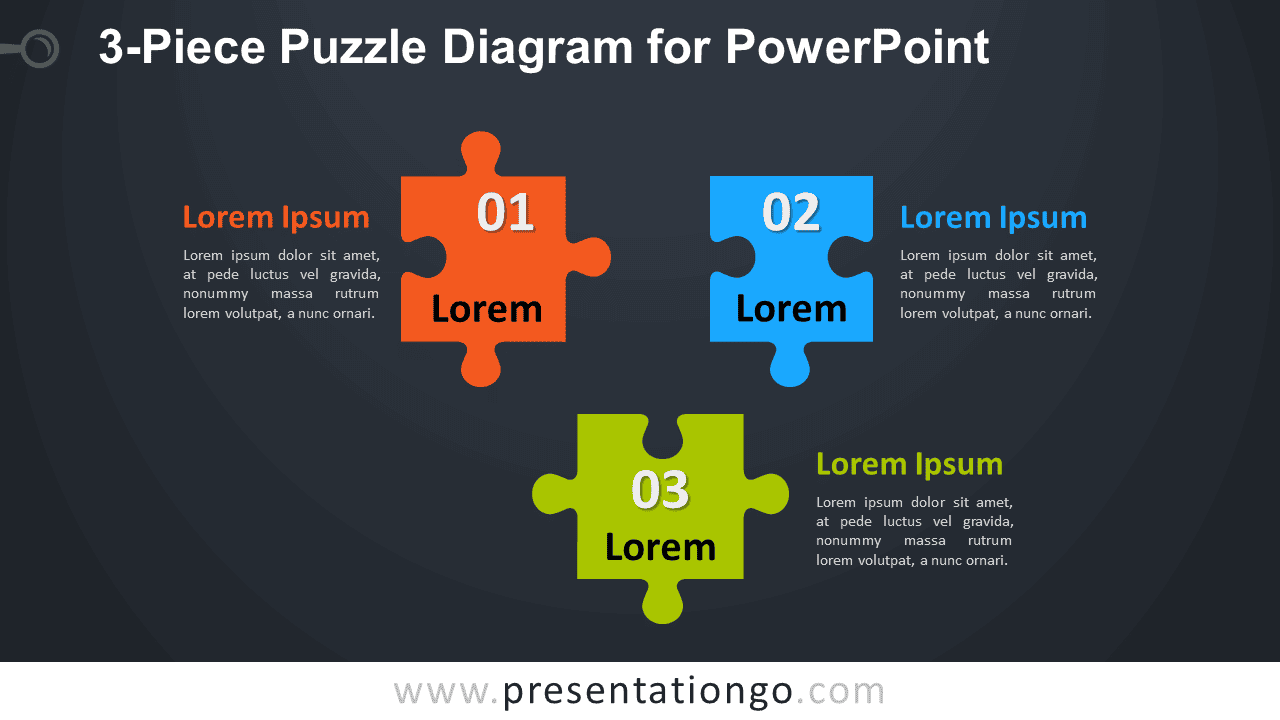
The 3-Piece Puzzle Diagram for PowerPoint presents three related concepts through separate numbered puzzle pieces. Each section combines a large puzzle shape with a number, short label, heading, and supporting text area. The layout works well for connected ideas, interdependent components, strategic areas, project stages, or other three-part concepts.
Diagram Preview


Features and Customization Options
- Compatible with Microsoft PowerPoint
- Includes 2 editable slides with matching layouts
- Editable text, shapes, colors, and sizes
- 100% editable vector shapes — no quality loss when resized
- Add, remove, or reposition puzzle pieces freely
- Includes both light and dark background versions
Design and Structure
The diagram uses three large puzzle pieces arranged in a balanced triangular composition. Two pieces sit across the upper portion of the slide, while the third anchors the layout below them. Each piece has a prominent numerical marker and a short internal label. Separate text blocks provide space for a heading and a concise explanation without overcrowding the puzzle shapes.
The 3-Piece Puzzle Diagram uses the familiar puzzle metaphor to represent elements that belong to the same system or idea. Because the pieces remain visually distinct, each section can describe an individual component while still supporting a shared concept. The editable PowerPoint shapes make it easy to update the numbers, labels, headings, and descriptions. You can also resize or reposition individual elements when adapting the diagram to another presentation.
Practical Applications
- Explain three connected business concepts
- Present three components of a strategy
- Show interdependent project elements
- Organize three stages of a process
- Break down a solution into three parts
- Present three factors within a framework
Summary
The 3-Piece Puzzle Diagram provides an editable PowerPoint layout for presenting three connected or interdependent elements. Its numbered puzzle pieces and dedicated text areas suit strategies, processes, frameworks, project components, and other three-part explanations.